


DJ Bhola, CPA
DJ has been providing bookkeeping services to dentists for over 12 years. He has a laser like focus on the business of dentistry and related taxes.
Up To $1 Million in Collections For $400/Month
No QuickBooks Online Subscription Needed. Saves you $60/month.
Bookkeeping for dentists only · 90+ dental practices · Serving practices across the USA
Start here
You can't fix what you don't know is broken.
Tick the ones that sound familiar. Each one is a symptom of bookkeeping that isn't finished every month.
Nothing checked yet
Most dentists check at least three.
Every one of these comes from the same place: bookkeeping that isn't finished on a schedule. Tick the ones that apply and we'll show you what changes.
Reports you receive
Your books are closed every month, so your numbers are never stale. Each month you receive:
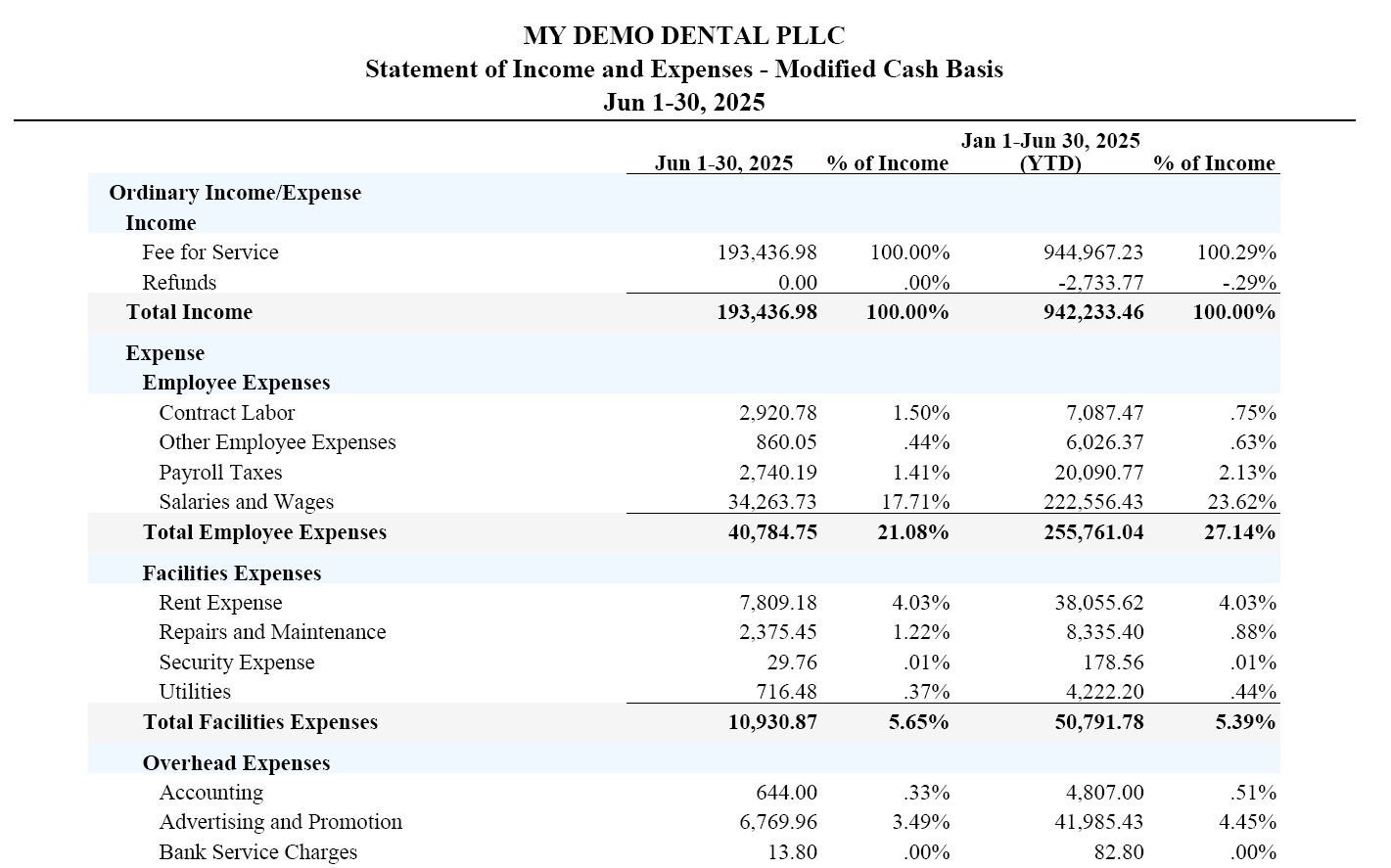
This report is not available in QuickBooks.
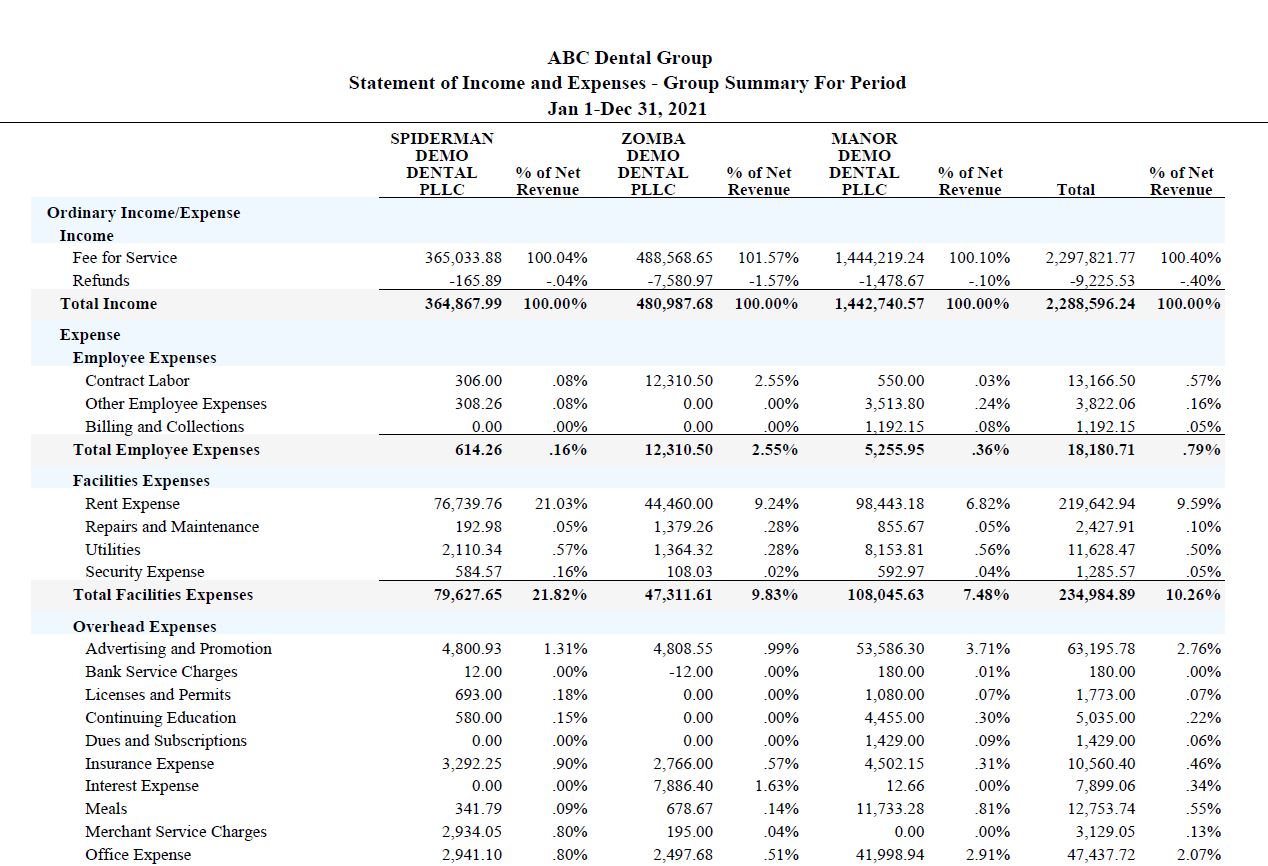
We provide combined profit and loss statements for multiple practice owners. This allows them to review multiple practices at the same time and the total income/expenses of all practices in one report. This may also be helpful from a tax standpoint since it summarizes the income for your tax accountant.
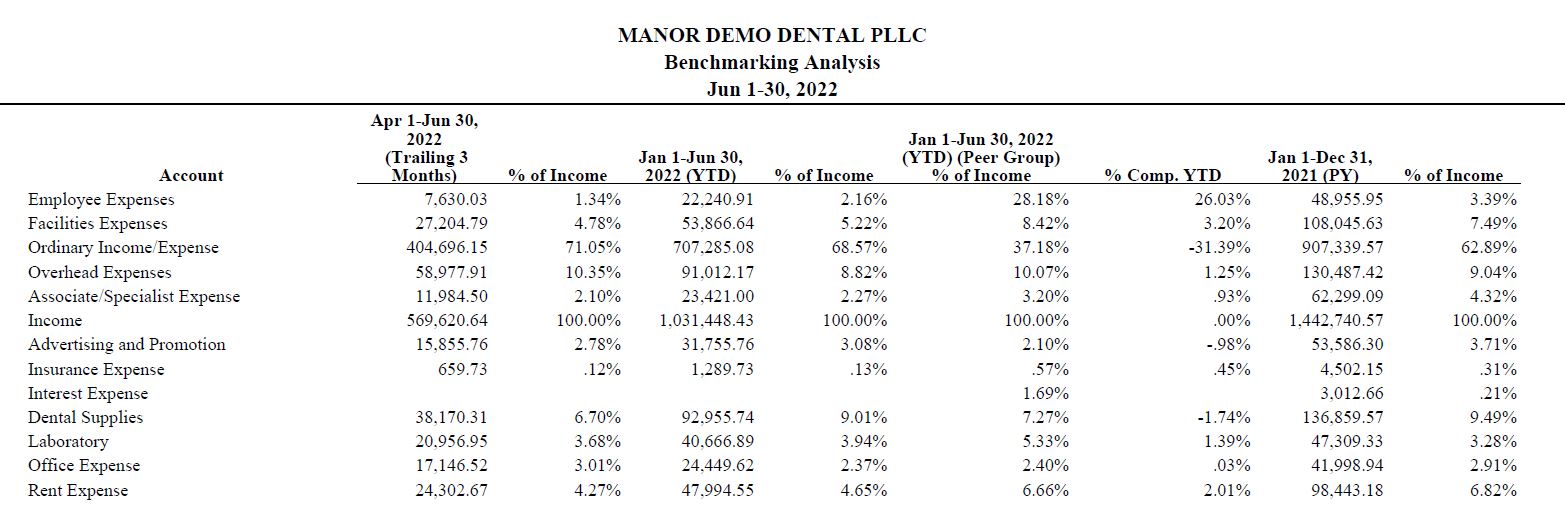
This report is not available in QuickBooks.
We provide bookkeeping services for dentists in a manner that is consistent for all our clients. This enables us to confidently do peer to peer comparison. You receive this report showing how you compare to your peers. This report shows the expense groups or accounts of your choosing.

We provide bookkeeping services for dentists only. We provide bookkeeping for over 90 dental practices each month. Therefore, we know how to categorize transactions correctly, which leads to accurate financial statements and less questions for you.

We provide a Tax package that includes the trial balance, general ledger, year end financial statements that your CPA can use to easily file the tax returns. Should they require any additional information, we are fully equipped to provide it.
Your Dental CPA receives a complete tax package each year.
What's included
We do bookkeeping for your dental practice so that you can make better/informed business decisions. Also, it helps your tax accountant do tax projections and make suggestions to reduce your tax burden.
Testimonial
I've been using DJ for bookkeeping and tax services for my Dental practice for about a year now and would highly recommend him. My experience has been very positive and Dj is always sure to answer any tax or accounting questions I may have. His services has been extremely valuable to the practice.
We are fortunate to have found DJ. Our previous accountant retired and we were struggling to find someone we trusted. For our situation, having an accountant that is knowledgeable and reliable allows us to focus more on growing our business and family. That is why, we highly recommend DJ and his team!
I would highly recommend DJ Bhola CPA without any hesitation. I wish I had worked with DJ right from the start. I know several other dentists who recommend him. DJ Bhola knows how to deal with Uncle Sam and is the best CPA that I have ever worked with.
DJ does a fantastic job - we are lucky to have him on our team. He is very thorough - and always very responsive and helpful in answering questions.
DJ is the Best! Been working with him since opening my new practice. Highly recommended.
DJ is great. He has been a great asset to our dental practice.
DJ has been providing bookkeeping services to dentists for over 12 years. He has a laser like focus on the business of dentistry and related taxes.

Megan has been providing bookkeeping services for dental practices for 5 years.

Yan has been providing bookkeeping services for dental practices for almost 2 years.
Bookkeeping Packages for Dentists
You don't need QuickBooks (Saves you $60/month for each entity)
For Dental Practices With Collections Up To One Million
| Services | Premium | Optimal | Essential |
|---|---|---|---|
| Monthly Base Fee | $500 | $450 | $400 * |
| Bookkeeping Monthly | ✓ | ✓ | ✓ |
| Combined P&L for Multi-Practice Owners | ✓ | ✓ | ✓ |
| Bench Marking Analysis | ✓ | ✓ | ✓ |
| Business Questions | ✓ | ✓ | ✓ |
| Filing Form 1099 for Vendors | ✓ | ✓ | — |
| Completed by | 7th | 20th | End of month |
| Email Response Business Days | 2 | 3 | 5 |
| Get Started | Get Started | Get Started |
* Essential package: $400 per month for dental practices with up to $1 million in collections, $450 per month between $1 and $1.5 million, and $500 per month between $1.5 and $2 million. Price is per practice location. Call us for practices over $2 million in collections. Up to 5 bank / credit card / line of credit accounts included; $15 per additional account per month.
FAQ
We provide bookkeeping services for dentists all over the USA. Tax preparation is available for dental practices located in Texas.
Still have a question? Call 512-497-4946The Essential package is $400 per month for dental practices with up to $1 million in collections, $450 per month between $1 and $1.5 million, and $500 per month between $1.5 and $2 million. Price is per practice location. Call us for practices over $2 million in collections.
No. We use in-house built accounting software, so you don't need QuickBooks. That saves you $60 per month for each entity.
No. We provide bookkeeping services for dentists only, and we complete bookkeeping for over 90 dental practices each month. That is why we know how to categorize dental transactions correctly, which leads to accurate financial statements and fewer questions for you.
Yes. Multi-practice owners are a large part of our work. You receive a combined profit and loss statement each month showing every practice at the same time plus the total income and expenses of all practices in one report. This report is not available in QuickBooks.
Yes. We provide a tax package that includes the trial balance, general ledger, and year end financial statements that your CPA can use to easily file the tax returns. If they need anything additional, we can provide it.
Because we do bookkeeping the same way for every client, we can compare your practice to your peers. You receive a report showing how you compare to your peers, for the expense groups or accounts of your choosing.
We provide bookkeeping services for dentists all over the USA. Tax preparation is only available for dental practices located in Texas.
We don't pay bills or write checks, we don't reconcile day sheets or receivables, we don't run payroll, and we don't prepare taxes outside Texas.
Tell us about your practice and we'll come back with a start date and a flat monthly price. Or call and talk to a CPA who works only with dentists.
Call us: 512-497-4946